With dozens of e-label platforms now competing for winery business, choosing the right provider is a decision that will affect your compliance, costs, and flexibility for years. A poor choice can mean vendor lock-in, unexpected price increases, or — worst case — QR codes that stop working while your bottles are still on shelves.
This guide walks through the eight criteria that matter most, compares pricing across major providers, and flags the red flags to watch for.
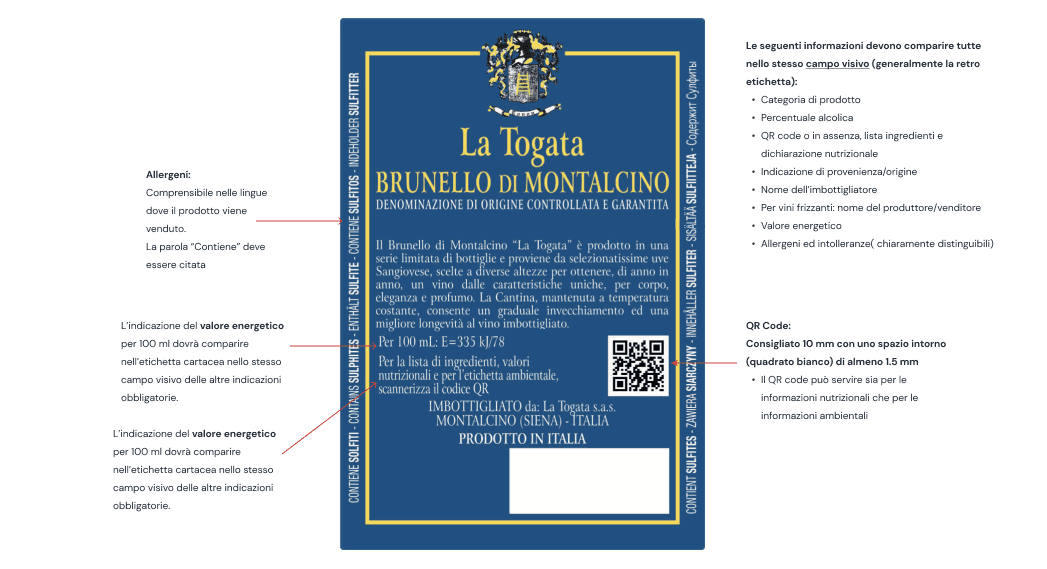
For background on what the regulation requires, see our EU wine labelling regulation guide or the full Wine E-Label Masterguide.
Why Your Choice of Provider Matters
An e-label is not a one-time purchase. Once a QR code is printed on a bottle, it must continue to work for as long as that wine is in circulation — and that duration varies depending on the type of wine. That means you are entering a long-term relationship with your provider, and switching later is difficult if the QR code URLs are tied to the provider's domain.
That's why it's worth taking the time to evaluate your options carefully — the differences between providers can be significant.
Criterion 1: Pricing Model
E-label pricing varies widely. The key question is not just the headline price, but how costs scale as your label count grows.
Watch for these pricing structures:
- Annual subscription with label tiers — most common. You pay a fixed fee per year for a set number of labels. Check whether old vintages count toward your limit or only new labels.
- Per-label pricing — some providers charge per label created. This can become expensive for producers with large catalogues.
- Free tier — some providers offer a small number of free labels to get started. Useful for testing, but check what features are limited on free plans.
- Watch for recurring charges on old labels — be aware that some providers charge you again for labels from previous years that stay online. Make sure your provider only charges for new e-labels, not for keeping old ones active.
The bottom line: ask what your cost will be in year 3 when you have 50+ active labels, not just what it costs today for 5.
Criterion 2: Dynamic QR Codes
This is arguably the most important technical criterion. There are two types of QR codes:
- Static QR codes link to a fixed URL. If you need to change the e-label content, fix a translation error, or switch providers, you must reprint every physical label. This is a significant cost and compliance risk.
- Dynamic QR codes link to a URL that can be redirected. You can update e-label content, correct errors, and even migrate to a different provider — all without touching the printed bottles.
Always choose a provider that uses dynamic QR codes. If a provider only offers static codes, treat this as a disqualifying red flag.
Criterion 3: Automatic Translation
EU regulation requires that e-label information be available in a language easily understood by consumers in each market where the wine is sold. With 24 official EU languages, manual translation is impractical for most wineries.
Key questions to ask:
- How many languages does the provider support? Look for all 24 EU languages.
- Are translations automatic or do you input them manually?
- Does the provider use a pre-translated database of wine ingredients and allergens, or do you need to translate technical terms yourself?
- Can you review and edit auto-generated translations before publishing?
A provider with a comprehensive pre-translated ingredients and allergens database saves significant time — you select from standardised terms that are already verified across all 24 languages, rather than translating "potassium sorbate" or "pea protein" into Romanian yourself.
With a good e-label platform, you should also be able to modify all information at any point for each language. This is one of the key advantages of dynamic QR codes — you can correct translations, update ingredient lists, or adjust nutritional values without ever reprinting a physical label.
Criterion 4: Data Privacy and No-Tracking Compliance
EU Regulation 2021/2117 explicitly prohibits any collection or tracking of user data on e-label pages. This means the e-label landing page must not use:
- Cookies (of any kind)
- Google Analytics or similar tracking tools
- Tracking pixels or fingerprinting
- IP address storage
This is not optional — it is a legal requirement. Yet some providers host e-labels on platforms that include cookies or analytics by default. If your e-label page sets cookies, you are non-compliant regardless of what the label content says.
Ask your provider directly: does the e-label landing page use any cookies, analytics scripts, or tracking technologies? If the answer is anything other than an unambiguous "no," look elsewhere.
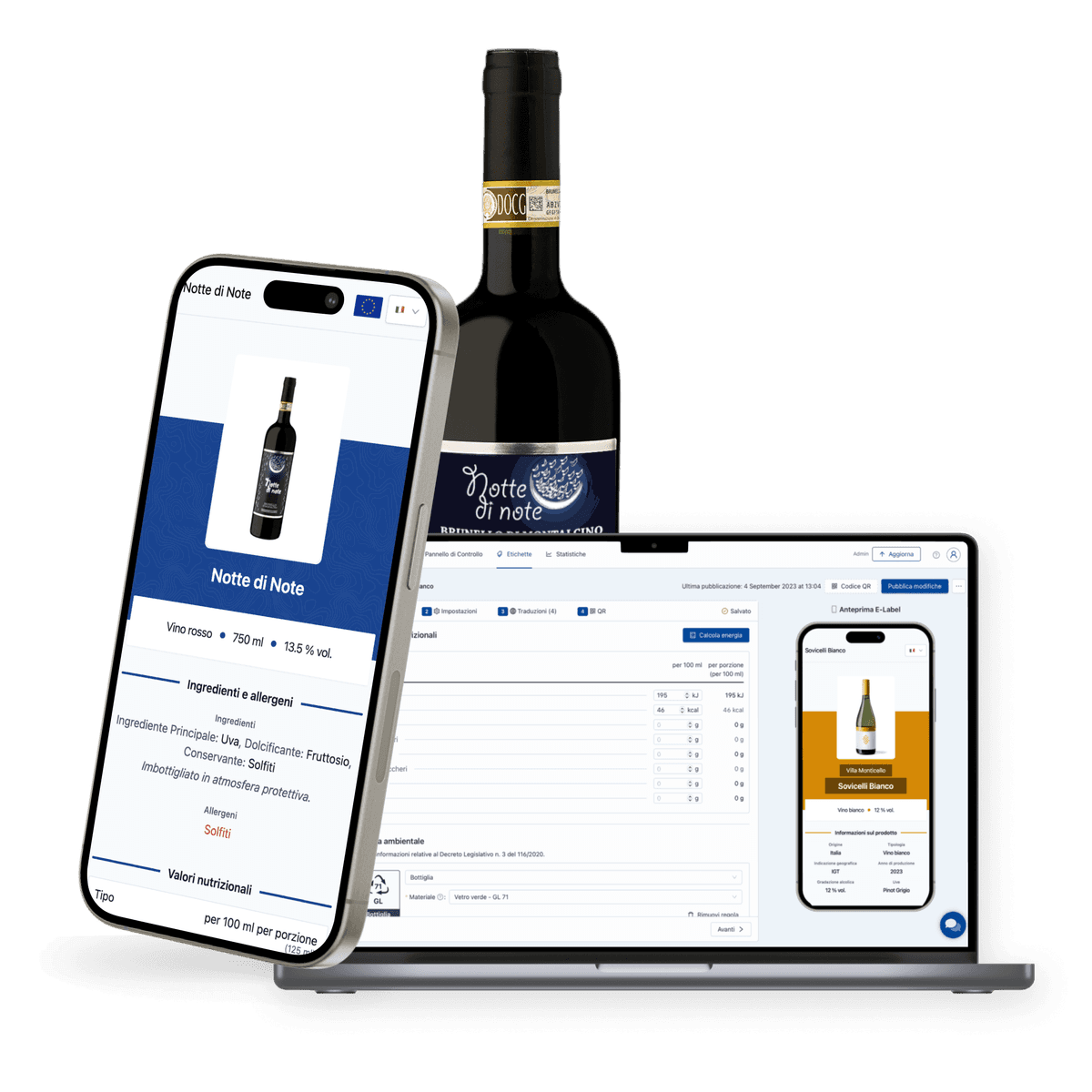
QRFox.eu E-Labels uses no cookies, no Google Analytics, and no third-party tracking on e-label pages — by design, not as an afterthought.
Criterion 5: Online Guarantee and Label Retention
Your e-labels must remain accessible for as long as the wine is in circulation. The required duration varies depending on the type of wine — some wines are consumed within a few years, while others may remain on shelves or in cellars for much longer.
Ask:
- What happens to your e-labels if you stop paying or downgrade your plan?
- Does the provider guarantee a minimum online period per label?
- What contingency plan exists if the provider shuts down?
- Can you export your data before leaving?
QRFox.eu guarantees 10 years per paid label, so wineries can be confident their labels will remain online as long as needed. Other providers may make no commitment beyond the current subscription period. This is a meaningful difference — if your provider disappears in year 3, your QR codes on bottles already in distribution stop working.
Criterion 6: Data Portability and Export
Vendor lock-in is a real risk in the e-label market. You should be able to export your product data (wine details, ingredients, nutritional values, translations) in a standard format at any time.
If a provider does not offer data export, you will have to re-enter all your wine data from scratch if you ever switch — a painful process for producers with dozens or hundreds of wines.
Also check: if you switch providers, can your existing QR codes be redirected to the new platform? This only works with dynamic QR codes (see Criterion 2).
Criterion 7: Multi-Brand and Multi-Entity Support
Larger producers, cooperatives, and wine agencies often manage multiple brands under a single account. Not all providers support this cleanly.
Check whether:
- You can manage multiple brands under one account
- Each brand can have its own visual identity on e-labels
- There are additional fees per brand (some providers charge EUR 25–50 per extra brand per year)
Criterion 8: Support Quality
When you have a compliance question at 8 PM the night before a shipment, the quality of support matters.
Evaluate:
- Channels: Email only, or also phone, chat, video?
- Response time: Hours or days?
- Availability: Business hours only, or extended?
- Language: Can you get support in your language?
QRFox.eu provides personal support 7 days a week via phone, chat, email, and video — including help with compliance questions, not just technical issues. This level of availability is uncommon among e-label providers, most of which offer email-only support during business hours.
Provider Pricing Comparison
Pricing as of early 2026. All prices in EUR per year, excluding VAT. Verify current pricing on each provider's website before making a decision.
| Provider | Starting price | Unlimited plan | Languages | Italian recycling |
|---|---|---|---|---|
| QRFox.eu | From €90/year | €1,460/year | 24 EU | Yes |
| U-Label / Scantrust | From €230/year | €1,500/year | 24 EU | Yes |
| Bottle Books | From €190/year | On request | Multiple | Yes |
Red Flags: What to Avoid
When evaluating providers, these are disqualifying issues:
- No data export — you are locked in permanently
- Cookies or analytics on e-label pages — you are non-compliant with EU Regulation 2021/2117
- Static QR codes only — you cannot update labels or switch providers without reprinting
- No free trial or test — you cannot evaluate the platform before committing
- Pricing that increases with total labels — costs compound every year as your catalogue grows
- No clear online guarantee — your e-labels could disappear if the provider changes terms
- Limited language support — if you sell across multiple EU markets, you need all 24 languages
- No Italian recycling label support — if you sell in Italy, D.Lgs. 116/2020 compliance is mandatory
10 Questions to Ask Before Signing Up
Use this checklist when evaluating any provider:
- What does my annual cost look like with 20, 50, and 100 active labels?
- Do you use dynamic or static QR codes?
- How many EU languages do you auto-translate into?
- Do your e-label pages use any cookies, analytics, or tracking?
- What happens to my e-labels if I cancel my subscription?
- Can I export all my product data in a standard format?
- Do you support Italian environmental labelling (D.Lgs. 116/2020)?
- Can I manage multiple brands under one account?
- What is your response time for support requests?
- What contingency plan exists if your company shuts down?
If a provider cannot answer these questions clearly and confidently, that tells you something.
Getting Started
Ready to evaluate your options? Try QRFox.eu free — create your first e-labels with no credit card, full 24-language translation, and zero tracking on your e-label pages. If you have questions, reach out to our team for a personal walkthrough.
For the full technical details on what your e-labels must contain, see our Wine E-Label Masterguide.