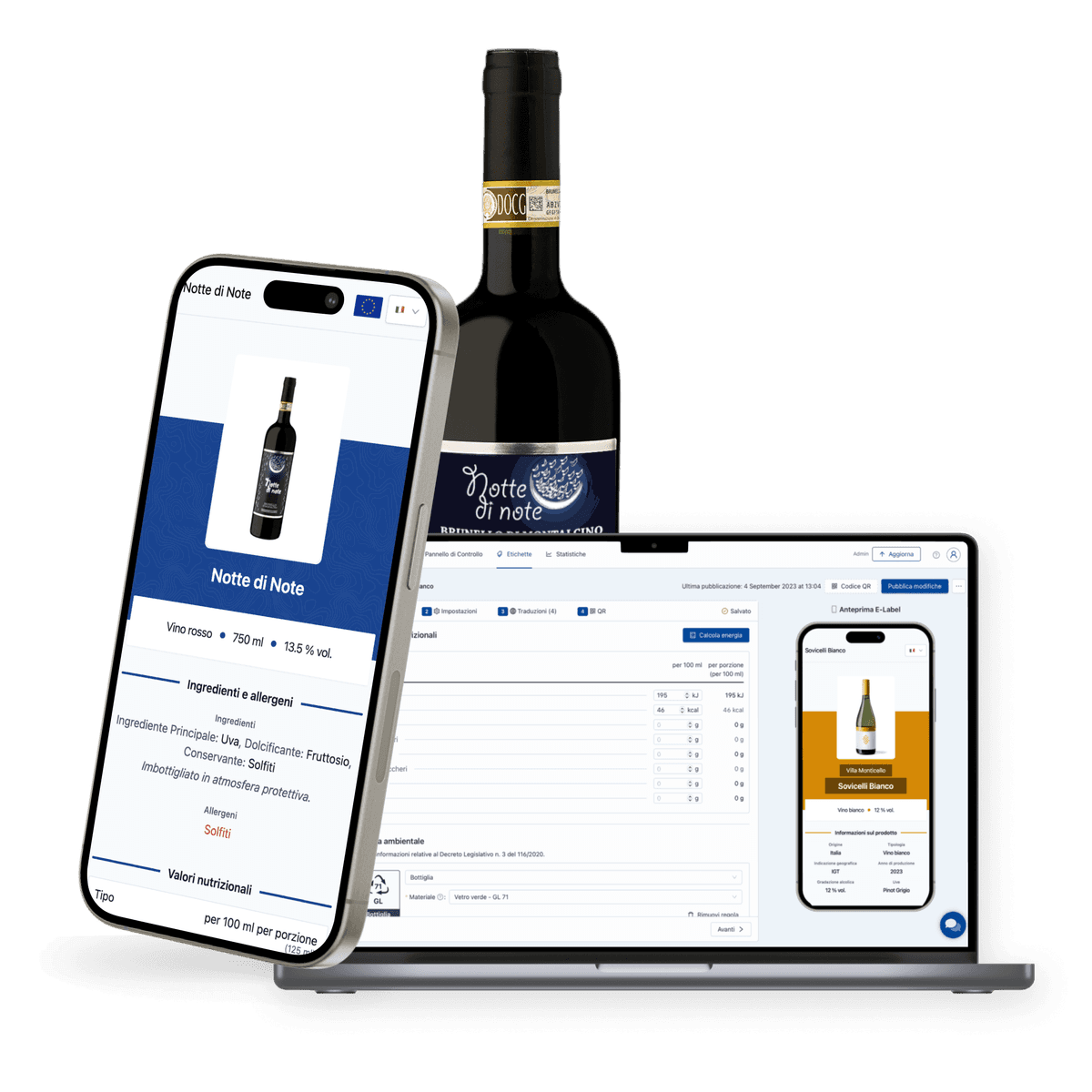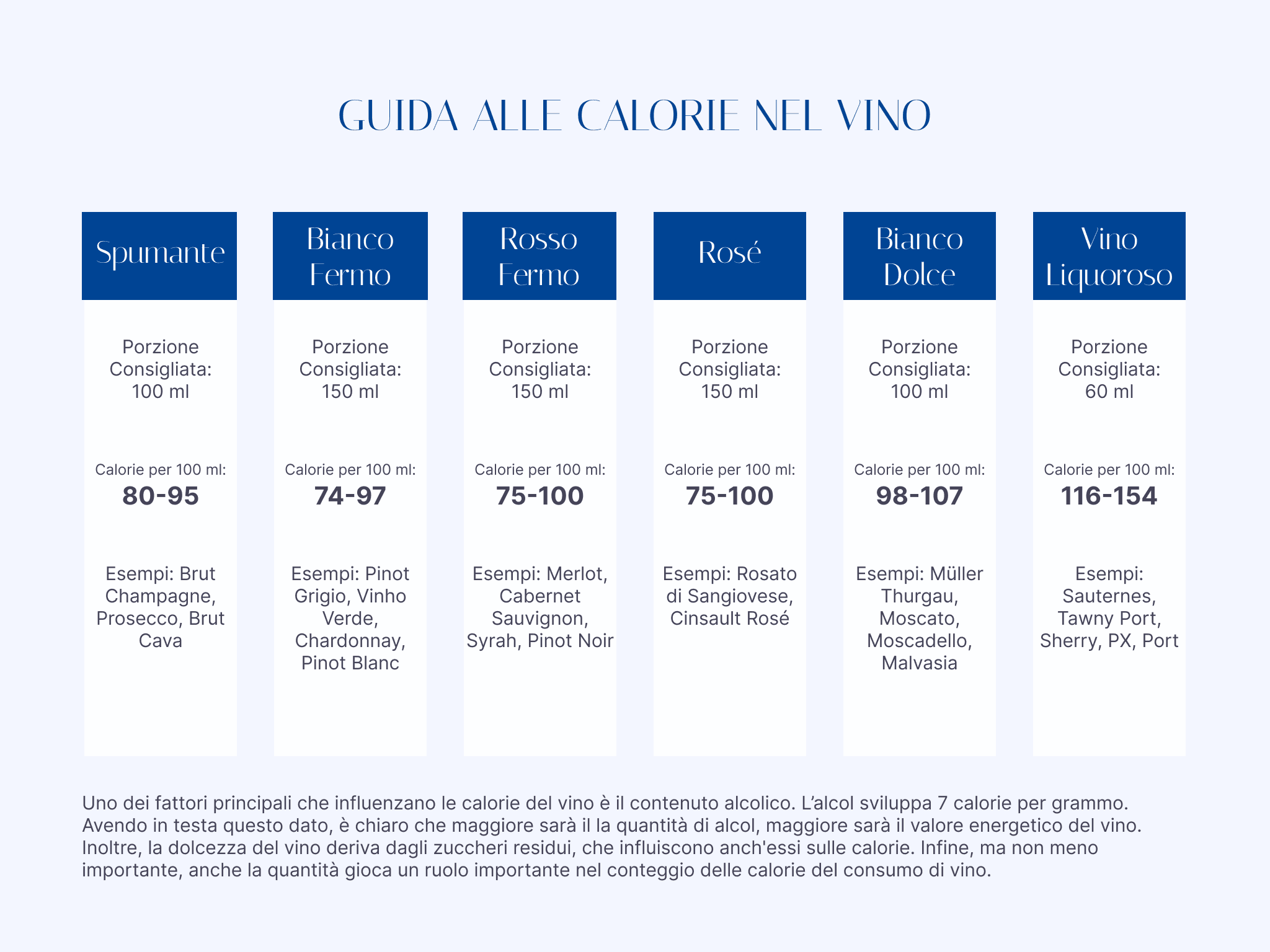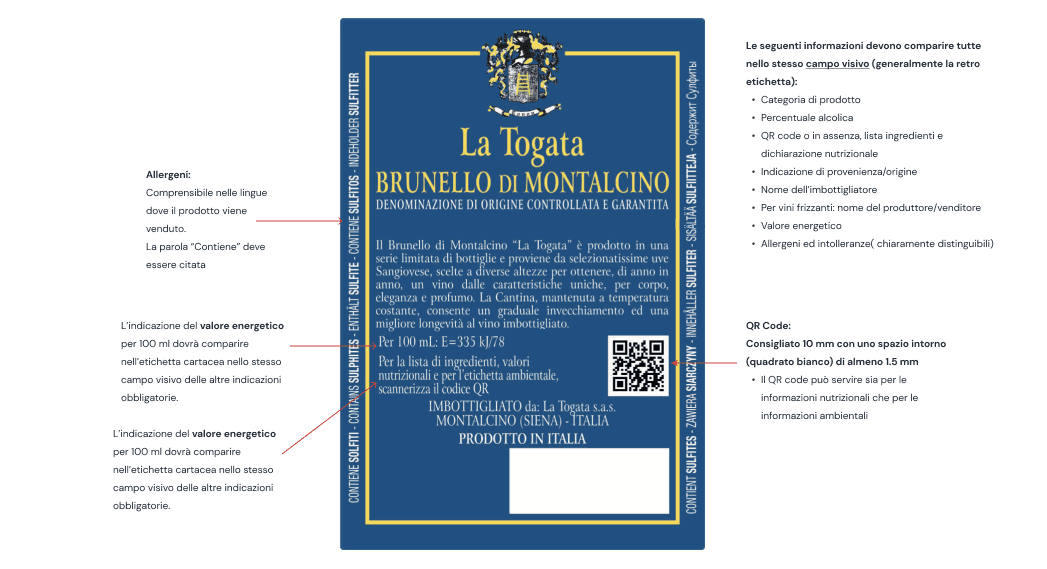
What must appear next to the QR code on your wine label? A simple question — but one that caused a crisis across the European wine industry in late 2023. This article explains the "Ingredients" text requirement, the acceptable wording options, the language rules, and what to do if your existing labels don't comply. For the full regulatory context, see our Wine E-Label Masterguide.
This guide summarises the QR code text requirements for EU wine labels for informational purposes. For legal advice specific to your situation, consult a qualified wine law professional. Last updated: March 2026.
The Requirement: "Ingredients" Must Appear Next to the QR Code
Commission Notice C/2023/1190, Point 38, establishes that the QR code linking to the e-label must be identified on the physical label with a heading containing the word "Ingredients." Without this text, the electronically provided information could be deemed "concealed mandatory information" — effectively making the label non-compliant.
A QR code alone is not sufficient. The consumer must be able to identify, from the physical label, that the QR code provides access to the ingredient list and nutritional declaration — not marketing material or a website.
Acceptable Wording
The Commission does not prescribe exact phrasing. The following are all acceptable, provided they contain the word "Ingredients" in the market language:
| Wording | When to Use |
|---|---|
| Ingredients | Simple, widely used, clearly compliant |
| Nutrition/Ingredients | Emphasises both nutrition and ingredients |
| Ingredients and Nutritional Values | Most descriptive, common on back labels |
| Nutritional Declaration and Ingredients | Alternative ordering, equally valid |
What is NOT acceptable:
- An "i" symbol (information icon) alone — explicitly rejected by the Commission
- A generic QR symbol without text
- The word "Information" without "Ingredients"
- No text at all next to the QR code
The text must meet the same 1.2 mm minimum font height required for all mandatory label information, and must be printed in sufficient contrast to be legible.
Language Rules
The wording must be in an official EU language easily understood by consumers in the market where the wine is sold. Language requirements vary by member state — and some countries with multiple official languages may require the wording in more than one.
In practice, the "Ingredients" wording on the physical label should match the primary language of the back label. For wines exported to multiple EU markets with a single back label, include the wording in the dominant market language.
For the e-label itself, we recommend activating all the languages corresponding to the markets where the wine is sold. This way, consumers in each country can access the full ingredient list and nutritional declaration in their own language. QRFox.eu E-Labels supports all 24 official EU languages — you choose which ones to enable, and the translations are generated for you.
The 2023 Controversy: What Happened
Commission Notice C/2023/1190 was published on 24 November 2023 — just 14 days before the 8 December compliance deadline. By that time, hundreds of millions of labels had already been printed, many using only an "i" symbol next to the QR code. The ruling that "i" was insufficient meant producers faced reprinting or applying corrective stickers, at significant cost and with virtually no time to prepare.
The European Parliament's Committee on Agriculture and Rural Development, along with several member states, formally communicated their concerns to the Commission — arguing that publishing binding guidance so close to the deadline violated the principles of legal certainty and proportionality.
For a detailed analysis of the legal aspects, wine law specialist Floriana Risuglia (Vice President UGIVI, ONAV Delegate, AIDV-IWLA) and oenologist dott. Baccigalupi discussed the implications in a dedicated webinar — the recording is available in Italian on YouTube.
What Changed with Regulation 2026/471
In March 2026, Regulation (EU) 2026/471 addressed several of the concerns raised during the 2023 controversy. Key changes relevant to QR code labelling:
- Harmonised standards: The Commission is now empowered to establish EU-wide standards for how electronic means (including QR codes) must be identified on wine packaging. This replaces the previous patchwork of national interpretations and Commission Notices with binding, predictable rules.
- Reduced ambiguity: The aim is a single standard that all EU member states apply consistently, eliminating the kind of last-minute guidance changes that caused the 2023 crisis.
- Transition considerations: Producers who adopted compliant practices early (including the "Ingredients" text) are already aligned with the direction of harmonisation.
The core requirement — that the word "Ingredients" must appear next to the QR code — remains unchanged. What 2026/471 changes is the process by which such standards are established and communicated.
What to Do If Your Labels Are Not Compliant
If you have existing labels with only an "i" symbol or no text next to the QR code, you have several options:
Corrective stickers: Apply a small sticker over or near the QR code area with the compliant "Ingredients" text. This is the most practical solution for labels already printed and in stock.
Back label reprint: For future production runs, update the back label design to include the "Ingredients" heading. This is a one-time cost that brings all future labels into compliance.
Dynamic e-label advantage: If your QR code links to a dynamic e-label platform, the digital content behind the code is already compliant — it displays the full ingredient list and nutritional declaration regardless of what text appears on the physical label. The physical label is the only part that needs correction.
Risk assessment: For wines already in distribution, enforcement may be pragmatic during the transition period. However, new production runs should always use compliant label designs. The cost of a corrective sticker is negligible compared to the risk of a non-compliance penalty.
Getting Compliant
The "Ingredients" text requirement is straightforward once you know the rules: include the word "Ingredients" (or an equivalent phrase) in the market language, next to the QR code, at a minimum of 1.2 mm font height. For new label designs, this is a minor addition. For existing labels, corrective stickers are a practical interim solution.
Create your first compliant e-label free — no credit card required. For the full step-by-step implementation guide, see how to implement QR codes for wine labels, or visit the Wine E-Label Masterguide for comprehensive compliance details.