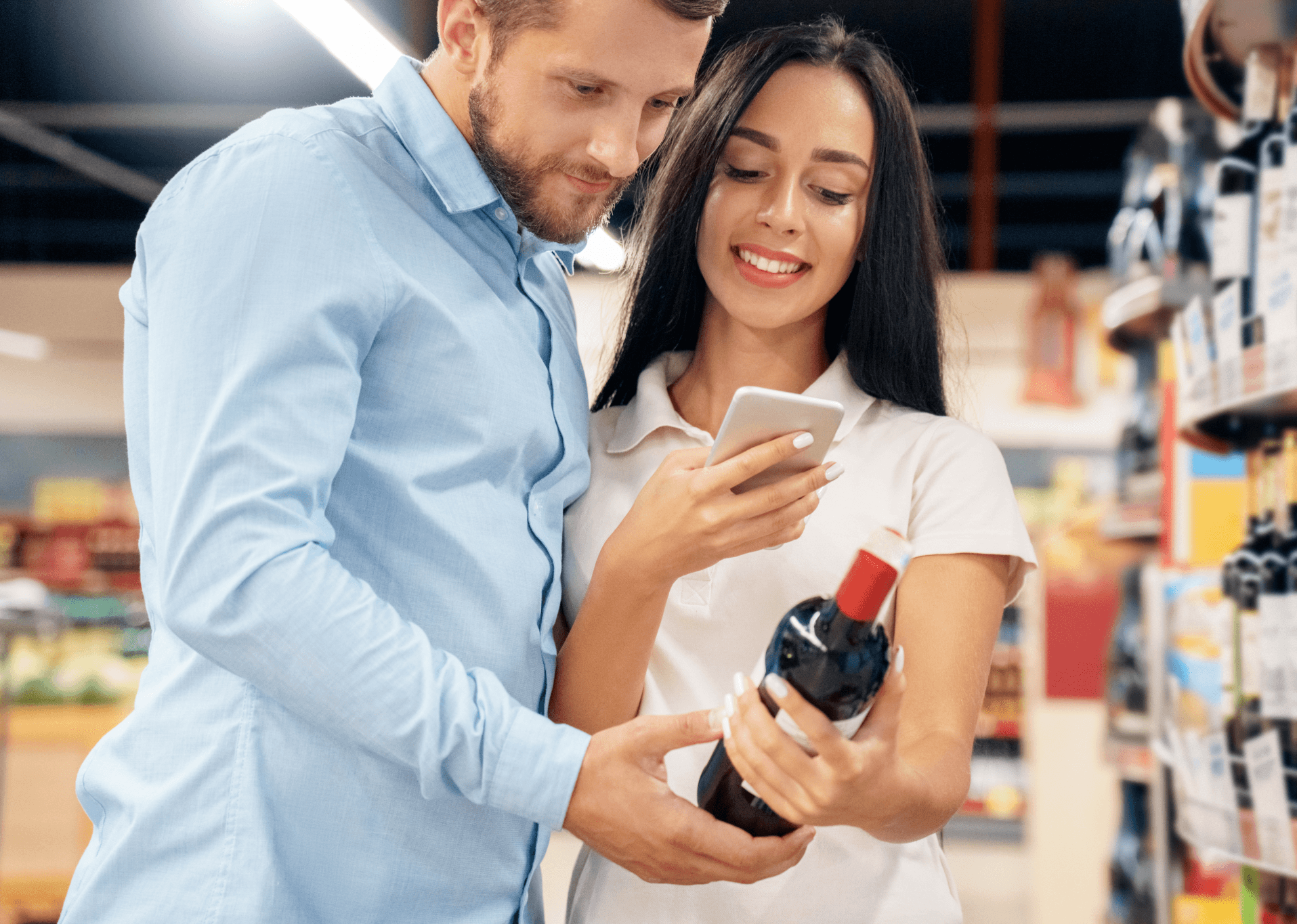
Wine e-labels are a regulatory requirement — but they're also a business tool that saves money, simplifies exports, and builds consumer trust. Most wineries focus on compliance and overlook the practical advantages. This article covers five concrete business benefits that make e-labels worth more than the cost of compliance. For the full regulatory context, see our Wine E-Label Masterguide.
This article discusses business benefits of wine e-labels for informational purposes. Last updated: March 2026.
Benefit 1: Instant Label Updates Without Costly Reprinting
Physical wine labels are static — once printed, any error or regulatory change means reprinting and relabelling. With dynamic QR codes, the e-label content behind the code can be updated at any time without touching the physical label.
When this matters:
- Ingredient corrections: A blend change or data entry error is discovered after bottling. With a dynamic e-label, the fix is instant and free. With physical labels, the entire run must be reprinted.
- Regulatory updates: When Regulation 2026/471 introduced new requirements in March 2026, wineries using dynamic e-labels updated their existing labels immediately. Those with static labels or printed ingredient lists faced reprinting costs.
- New market entry: You decide to export to a new EU country and need the e-label in an additional language. Dynamic update — no reprint needed.
The cost of reprinting: Physical label reprinting typically costs EUR 0.30–1.00 per label including design, plate charges, printing, and application. For a 10,000-bottle production run, a single reprint costs EUR 3,000–10,000. For wineries producing multiple SKUs across multiple vintages, the exposure is substantial. A dynamic e-label eliminates this cost entirely for content changes.
QRFox.eu E-Labels uses dynamic QR codes by default — every paid label can be updated at any time, for the entire life of the product.
Benefit 2: Simplified Multilingual Compliance Across EU Markets
The EU has 24 official languages. The e-label regulation requires that ingredient and nutritional information be available in the language of the country where the wine is sold. For a winery selling in Italy, France, Germany, and the Netherlands, that means four languages at minimum.
Without e-labels: You need separate physical back labels for each language market — or a label crammed with multilingual text that is nearly unreadable. Both options are expensive and logistically complex, especially for small and mid-sized producers.
With e-labels: A single QR code on the bottle serves every activated market. You select the languages matching the countries where your wine is sold, and the e-label displays the information in the appropriate language. One label design, one printing run, one QR code.
QRFox.eu E-Labels provides a pre-translated database of ingredients and nutritional declarations covering all 24 official EU languages. You enter your data once in your own language, select and activate the languages you need, and the platform generates the translations for you.
Benefit 3: Consumer Trust Through Transparency
Transparency is increasingly a competitive advantage in the wine market. Consumers — particularly younger demographics and health-conscious buyers — actively seek information about what they consume. E-labels deliver this information in a format that is accessible, multilingual, and always up-to-date.
What builds trust:
- Complete ingredient disclosure — consumers see exactly what is in the wine, from grapes to processing aids, presented clearly and without ambiguity
- Allergen clarity — sulphites, egg derivatives, and milk derivatives are prominently declared, giving consumers with sensitivities confidence in their choice
- Nutritional transparency — energy values, carbohydrates, and sugar content per 100 ml, enabling informed dietary decisions
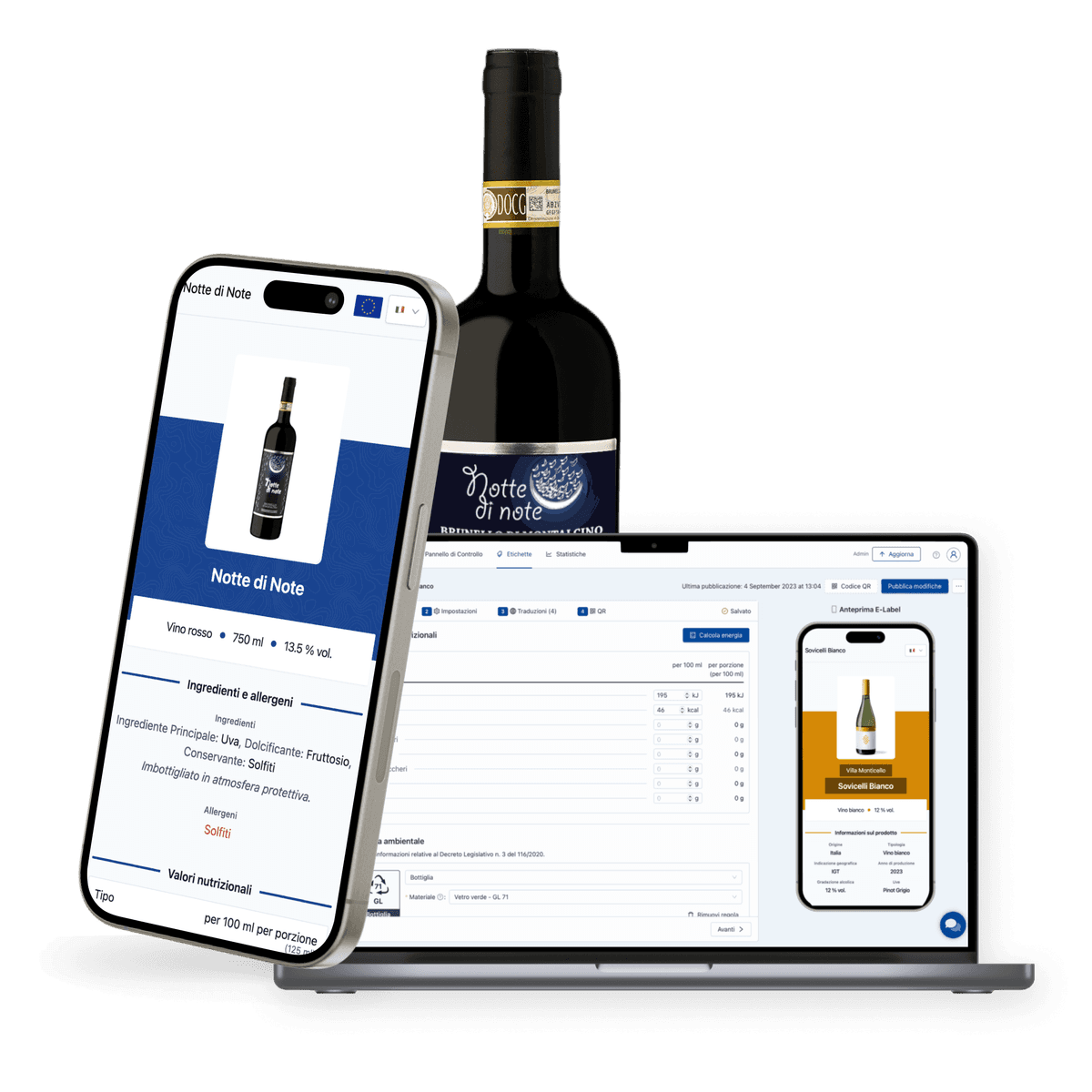
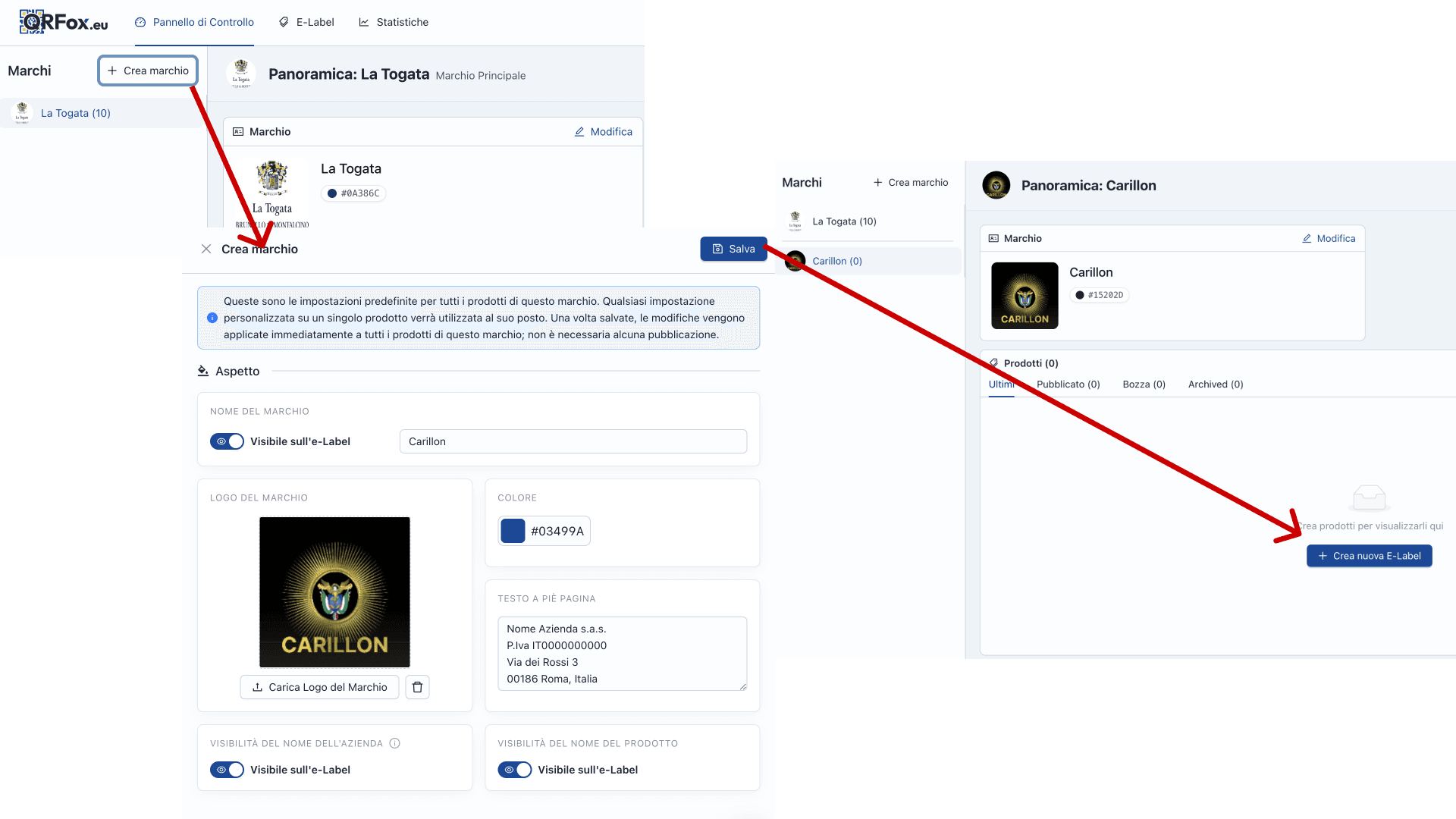
- Brand-consistent presentation — e-labels don't have to be generic white pages. With QRFox.eu E-Labels, you can customise the colour scheme, upload your logo, and add an image for each label — reinforcing brand recognition when consumers scan the QR code
The producers who treated e-labels as a mandatory nuisance have a generic compliance page. Those who invested in a quality e-label have an extension of their brand experience — and consumers notice the difference.
Benefit 4: Reduced Environmental Impact
Sustainability claims ring hollow when a winery reprints thousands of labels for a minor regulatory update. E-labels directly reduce waste by eliminating the need for physical reprints when content changes.
Waste reduction in practice:
- No reprints for corrections: Ingredient errors, regulatory updates, and new language additions are handled digitally — no paper, ink, or adhesive waste
- Simpler physical labels: Moving detailed ingredient lists and nutritional tables to the e-label frees space on the physical label, potentially allowing smaller labels or simpler designs with less material
- Italian recycling integration: For the Italian market, D.Lgs. 116/2020 requires recycling symbols and disposal instructions on packaging. Including this information on the e-label avoids the need for additional physical stickers or label redesigns
For wineries with organic, biodynamic, or sustainability certifications, the e-label provides a natural platform to display these credentials alongside the mandatory compliance information — visible to every consumer who scans the QR code.
Benefit 5: Anonymous Market Insights
The regulation prohibits tracking individual consumers on e-label pages. But aggregate, anonymised scan data still provides valuable business intelligence — without collecting any personal data.
What you can learn:
- Geographic distribution: Country-level scan data shows where your wines are actually being consumed. This is especially valuable for export-heavy producers — you may discover significant consumption in a market you weren't actively targeting.
- Temporal patterns: Scan activity by day of week and time of day reveals when consumers engage with your labels — useful for aligning marketing campaigns and social media activity.
- Product performance: Which wines generate the most scans? High scan rates indicate consumer curiosity and engagement — a signal that can inform production planning and marketing focus.
- Trend tracking: Scan data over time shows whether consumer engagement is growing, stable, or declining for specific products or markets.
These insights come from aggregate counts — no individual consumer is ever identified, and no personal data is collected. It is compliance-safe intelligence that most wineries cannot get from any other source.
Getting Started
E-labels deliver value well beyond the compliance checkbox: cost savings, multilingual reach, consumer trust, sustainability, and market intelligence. The wineries that treat e-labels as a business tool — not just a regulatory obligation — gain a measurable advantage.
Create your first compliant e-label free — no credit card required. For guidance on what to look for in a platform, see our e-label provider evaluation guide, or visit the Wine E-Label Masterguide for full regulatory details.